Support Sophia

A successful life for Sophia requires a whole network of care.

Supporting Sophia is not only helping with one bill or one appointment. It means protecting her medical stability, preserving her abilities, creating access to school and community, and giving her family room to keep fighting without collapsing under the weight of systems that were never built for families like theirs.

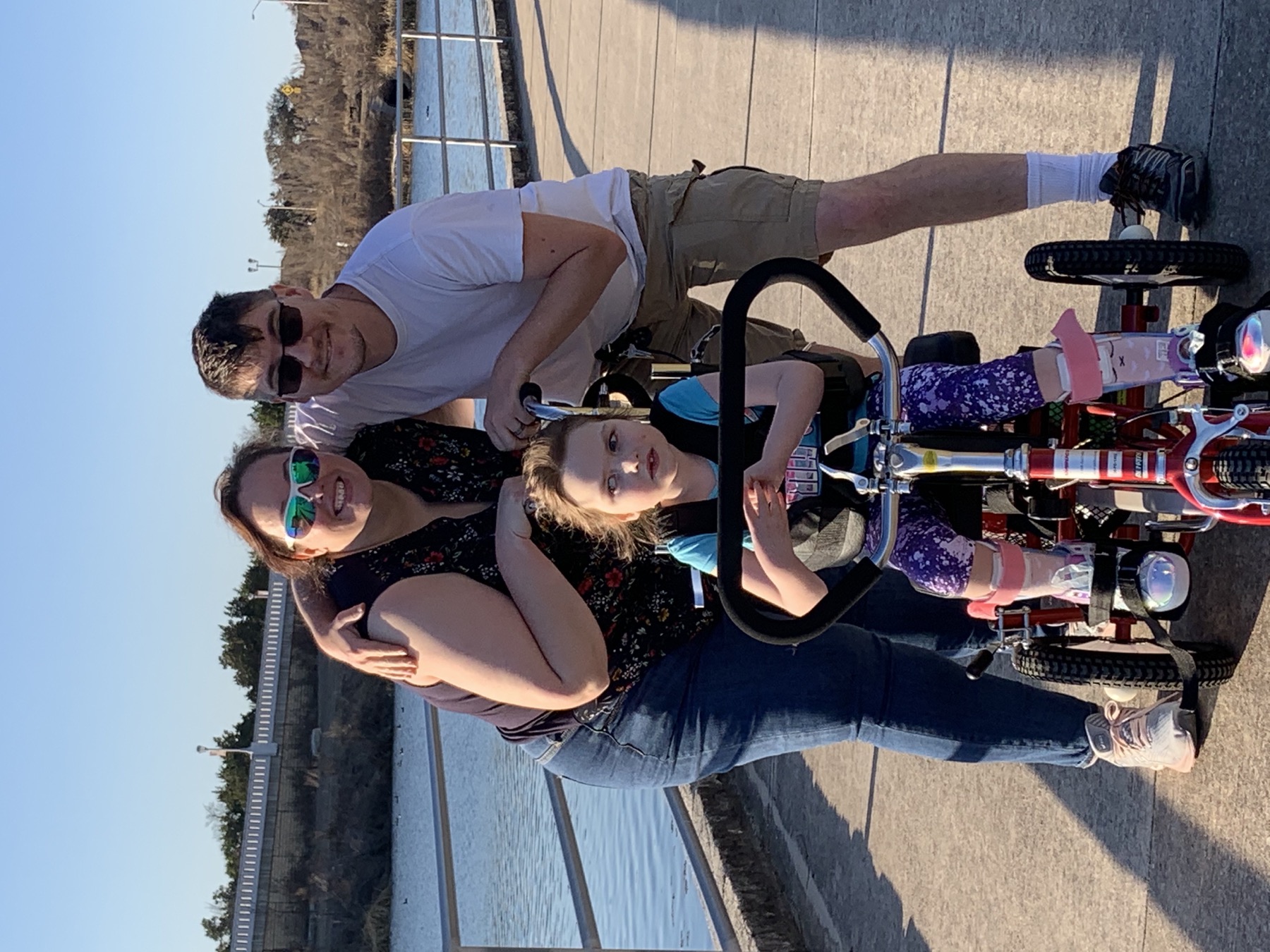
Sophia with her parents beside the water before their divorce filing
The parents being supportive of Sophia, prior to filing for divorce.

Sophia's highest level of care depends on specialists, therapies, education, insurance navigation, Medicaid coordination, private duty nursing, equipment, medication access, transportation, fundraising, employment flexibility, and the steady presence of family. For years, Dad carried much of the workday coordination that made those systems move at all.

Start with the care Sophia needs directly: the doctors, therapies, and clinical eyes that help protect her body from the constant pressure of Rett syndrome.

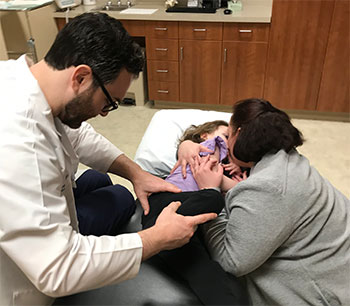
Sophia receiving medical care

Specialists

Sophia's care can involve Rett-specific neurology and gastroenterology, local neurology, local gastroenterology, pediatrics, epilepsy care, physical medicine, pulmonary, ENT, ophthalmology, orthopedics, scoliosis monitoring, dentistry, and visits to the Houston Rett Clinic.

Every specialist adds knowledge, but also scheduling, records, referrals, prior authorizations, travel, follow-up plans, and the emotional labor of retelling Sophia's story clearly enough to get the right care.

The Houston Rett Clinic is not a casual appointment. It means travel costs, time away from work, meals, lodging or long driving days, and the expense of getting a medically fragile child safely to a specialty team. On top of Houston visits, Sophia has recurring local doctor appointments that can quickly turn care into a near-daily calendar.

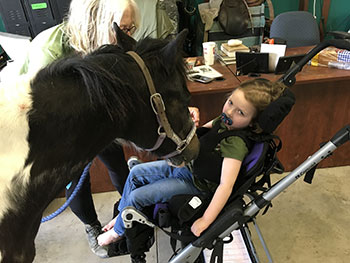
Sophia during horse therapy

Therapies

Therapies help Sophia preserve movement, communication, comfort, and access to the world. Physical, occupational, speech, adaptive physical education, aquatic therapy, music therapy, and horse therapy can all support quality of life.

For Rett syndrome and other rare illnesses, therapy often has to be intense, consistent, and aggressive because unused skills can disappear. The goal is not simply maintenance. The goal is to combat regression, protect mobility, build communication, reduce pain, and give Sophia the strongest possible chance at meaningful progress.

Insurance often pays only for the bare minimum, if it pays at all. In Sophia's case, Dad made it a point to push for the highest level of care and aggressive therapies, even when that meant appeals, scheduling burdens, out-of-pocket costs, and constant pressure to prove that Sophia deserved more than minimal support.

Then come the systems that decide whether care is possible: education rights, Medicaid, private duty nursing, and private insurance coverage.

Education graphic

Education

Sophia's educational journey began in the 2018-2019 school year, after her family contacted the local school district to initiate early evaluation. Because Rett syndrome and medical fragility are complex, the pre-evaluation process required additional documentation, research, and time before services could be put in place.

The struggle was not simply enrolling Sophia. It was getting the school to provide services, supports, accommodations, and goals that were fully appropriate in light of Sophia's facts and circumstances. Her education can involve physical therapy, occupational therapy, speech therapy, assistive technology, homebound services, adaptive physical education, private duty nursing considerations, and extended school year supports.

IDEA matters because it is the legal framework that promises a Free Appropriate Public Education for children with disabilities. But families still have to advocate inside ARD/IEP meetings, evaluations, procedural safeguards, related services, least restrictive environment questions, and disputes over what is actually appropriate for a medically fragile child.

The history matters too. In the 1950s and 1960s, many people with disabilities were excluded, institutionalized, or given only minimal care rather than education and rehabilitation. Family advocacy and early federal disability efforts helped lead to the Education for All Handicapped Children Act of 1975, later renamed IDEA. Protection and Advocacy systems grew out of the same hard lesson: society needed independent voices to defend the rights of people with disabilities when institutions and systems failed them.

Society has moved from exclusion toward rights, access, and inclusion, but Sophia's journey shows how much work remains. The next step is not just having laws on paper. It is making education, medical support, employment accommodations, and community life actually work for medically fragile children and their families.

Medicaid

Medicaid coverage can be life-changing, but coverage does not automatically mean access. Families still face provider networks, care coordination, reimbursement limits, waitlists, and nursing shortages.

Getting Sophia onto Medicaid was not quick or easy. Her family spent years fighting through waiver waitlists and underfunded systems. Dad advocated at the Texas State Capitol during legislative session, pushing for a bill, funding, and attention to families trapped on long lists while their children needed help immediately.

That advocacy ultimately helped move Sophia's name up on a very long waitlist and led to State of Texas StarKids Medicaid coverage. Medicaid brought major relief, but the family still has to fight through provider gaps, nursing shortages, reimbursement limits, and delays when a medication, service, equipment item, or specialist path is not simple.

Sophia with nursing care

Private Duty Nurse

Private duty nursing is one of the clearest examples of how Sophia's care is both medical and human. A nurse can provide monitored, reactive care in the home and at school so Sophia is safer during feeds, respiratory concerns, seizures, medication needs, transfers, illness, and sudden changes that cannot wait for the next appointment.

For Sophia's family, a private duty nurse also represents the difference between employment stability and constant crisis. It gave Dad a chance to keep working while knowing Sophia had trained eyes on her body and equipment during the day. Without that care, every workday carries a quiet fear: if something happens, who will see it in time, and how fast can a parent get to her?

The family advocated for private duty nursing throughout 2022. What they learned was heartbreaking and practical at the same time. Nurses were in high demand, hospitals could offer far more attractive pay, and Medicaid reimbursement rates made it difficult for home nursing agencies to recruit and keep nurses. The need was approved in theory, but the workforce reality still left the family without reliable coverage.

Private insurance can be even harsher. In the old insurance fight, private duty nursing was listed as a service often needed in public school, private school, and home settings, but private insurance may deny it, limit it, or classify it as not medically necessary. That phrase can sound administrative. For a medically fragile child, it can mean a parent standing in the gap between policy language and a child who still needs care.

When employers began pushing workers back into offices in 2022 and nurses were not available, intermittent FMLA became part of the family's survival plan. That is not a long-term care model. It is a parent trying to hold employment together while also keeping Sophia safe hour by hour.

Private Insurance

Private insurance is only as strong as the benefit plan behind it, and no two plans are exactly alike. Employer plans can be self-funded, sponsor-driven, and written differently from one workplace to another. When a parent changes jobs, the new plan may not cover the same services, formulas, therapies, nurses, medications, or equipment the prior plan covered.

That is what happened to Sophia's family when Dad moved from one job to another. The family thought the better job would finally create breathing room. Instead, the new insurance plan refused to cover Sophia's nutrition: not an optional comfort, but the food her body depended on through her feeding tube.

The plan modification took five months. During those months, the family tried every nutrition option they could reach, including a blended diet that pushed directly into the household grocery budget. The denial did not pause Sophia's body while paperwork moved. In early 2018, she was hospitalized for excessive vomiting and malnutrition, lost a noticeable amount of weight, became fatigued easily, and then had to slowly fight to regain the weight, energy, and strength the denial helped take away.

That is the cruelty of private insurance when it fails a medically fragile child. One plan can be beneficial, protective, and financially stabilizing; another can turn a parent's new job into a new crisis. The family took on debt during the months nutrition was denied, hosted fundraising events, reached out to local media, and kept appealing because Sophia still needed to be fed whether the plan language was ready to admit it or not.

Private insurance also creates hidden labor that most people never see. The family used insurance to protect against financial loss, stayed in contact with providers and an executive case manager, found billing and claim-processing errors, and sometimes received bills more than three months after service because claims had to be appealed. Covered services often still required preauthorization, leaving the family waiting for a decision while Sophia's needs continued in real time.

Insurance companies can call services not medically necessary even when parents know those services are what keep a child safe. Private duty nursing, respite, aggressive therapy, experimental treatments, and certain equipment can be denied or limited. When insurance denies nutrition, medication, therapy, or equipment, Sophia's family must appeal, document, call, wait, and often pay out of pocket while Sophia's needs continue right now.

After approval comes daily execution: equipment, prescriptions, transportation, and fundraising all have to work together before Sophia can simply get through the week safely.

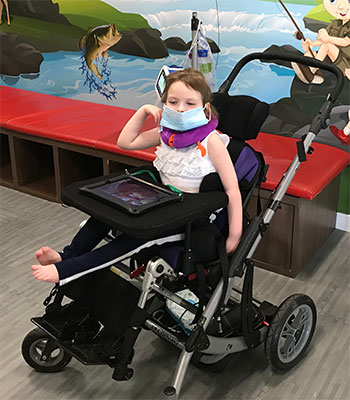
Sophia in her wheelchair

Medical Equipment

Wheelchairs, seating, gait training support, feeding supplies, respiratory equipment, therapy tools, home adaptations, and specialized mobility items shape Sophia's everyday safety and comfort.

Equipment is expensive, slow to approve, difficult to repair, and often tied to paperwork that does not understand how quickly a child can change.

Prescriptions

Medication access is part of Sophia's stability: seizure management, sleep support, respiratory care, gastrointestinal support, and any new Rett-specific treatments that may become available.

Prescriptions can require specialist notes, prior authorization, pharmacy coordination, insurance approval, Medicaid review, careful monitoring, and fast decisions when side effects appear.

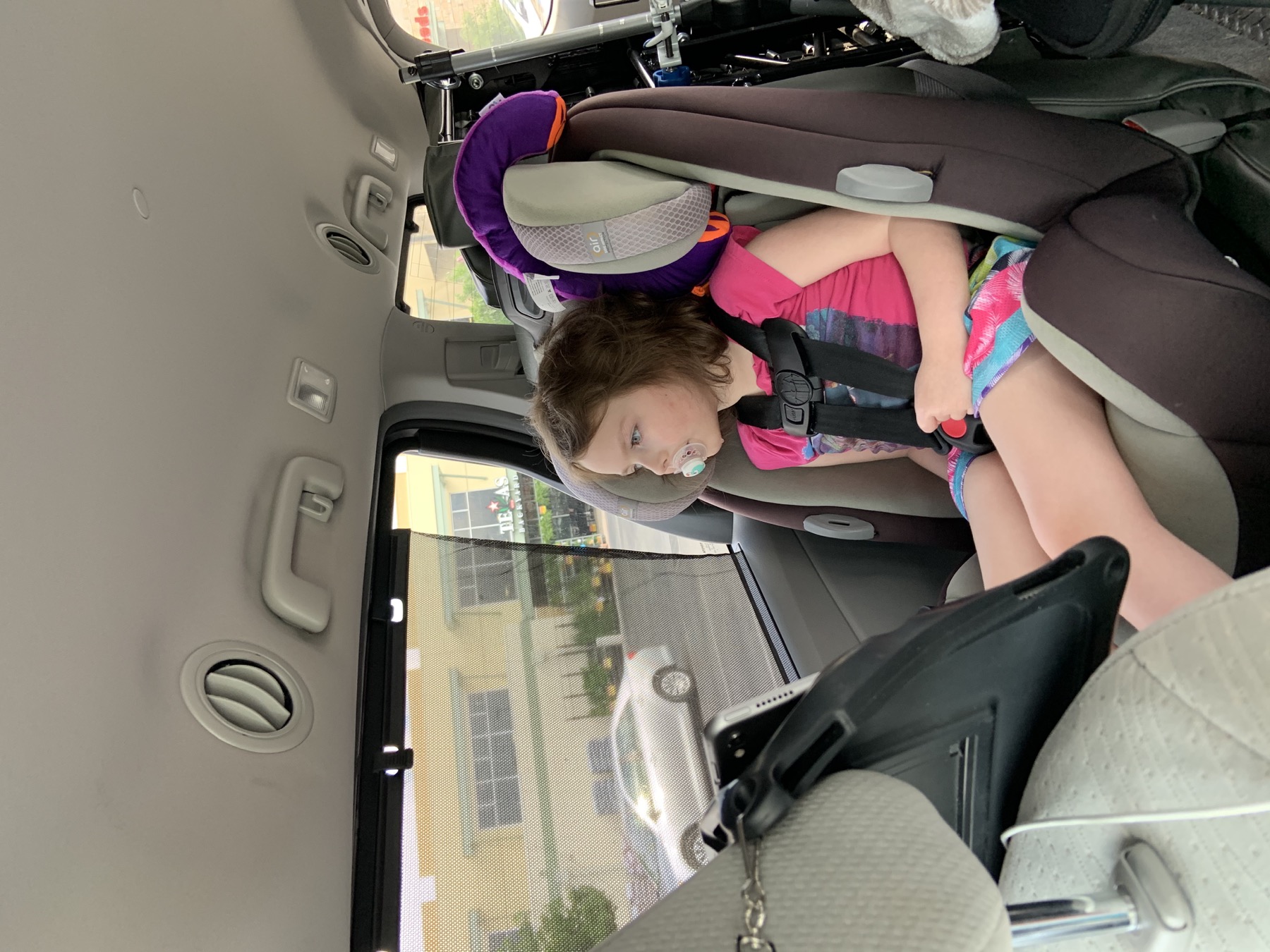
Sophia riding in a vehicle with medical equipment nearby

Transportation

Getting Sophia to care means reliable transportation that can handle appointments, therapy visits, equipment, illness risk, urgent needs, and wheelchair access.

When a vehicle breaks down, the problem is not inconvenience. It can interrupt care, delay therapy, increase stress, and threaten the family's ability to keep the schedule Sophia depends on.

In 2019, the family's only vehicle broke down beyond repair at the same time other household emergencies were stacking up. The refrigerator broke. The air conditioner failed in the middle of a Texas summer. Savings were already stretched thin, and bankruptcy started to feel like the only way out.

Then came a quiet, unspoken loan that helped keep the family from losing everything. It allowed them to purchase another vehicle, keep the home functioning, and continue getting Sophia to the care, therapies, appointments, and services she needed. For a medically fragile child, transportation is not simply a ride. It is access to survival.

As Sophia's mobility and equipment needs have grown, transportation also means planning for wheelchair accessibility, safe transfers, enough room for supplies, and a vehicle that can carry Sophia without turning every appointment into a physical and financial crisis.

Fundraising

Fundraising has always filled the painful space between what Sophia needs and what insurance, Medicaid, grants, and ordinary income will actually cover. In earlier years, the family raised funds through donations, garage sales, community support, cure-focused events, and careful planning around medical debt and uncovered services.

Prior fundraising had two purposes that often overlapped: helping fund research toward a cure and helping the family survive yearly medical expenses that kept returning. Those efforts were harder than they should have been. Weather, pandemics, limited donor networks, and the financial strain already carried by medically fragile families made every fundraiser feel like trying to breathe through a closed door.

Today, the current fundraising path has shifted toward Cline's Recycling, turning donated and recyclable items into practical support for Sophia's ongoing needs. Every donation, item, and act of community help is more than money. It is time, access, therapy, equipment, transportation, and relief from the feeling that the family must carry every impossible thing alone.

And underneath every system is the family: parents trying to stay employed and a sister whose childhood still deserves room, joy, and tenderness.

Parent's Employment

Employment keeps a family financially stable, but medically fragile caregiving does not fit neatly around office hours. When a caregiver has a medically fragile dependent at home, they can feel like a target at work: too many appointments, too many emergencies, too many calls from school or providers, too many moments where a parent has to choose between being a good employee and being the parent their child needs to survive.

When Sophia was born, Dad was the only parent working. Mom was a stay-at-home parent, caring for Sophia during the day while Dad went to work and tried to keep the household steady on one income. At first, that was the plan: Dad would provide financially, Mom would care for the girls, and the family would build a normal life around love, home, and routine.

Then the signs of concern became medical realities, and the financial strain started showing up in the mail: appointments, tests, therapies, supplies, insurance limits, bills that arrived late, bills that did not make sense, and bills that still had to be paid. After Sophia's Rett syndrome diagnosis in 2017, Dad got a second job. It was not ambition. It was survival. Working 40 hours is normal; working 80 hours is insane.

Those days became a blur of alarms, work clothes, medical calls, and exhaustion. Dad's day could start around 5:30 a.m. and end near 11:30 p.m. He was trying to be an employee, a provider, a husband, and Sophia's father while carrying the fear that if he slowed down, the bills would bury the family. The cost was not only financial. His body started paying too. At one point, Dad passed out and fell while working the second job. That was the moment the family could no longer pretend the plan was sustainable.

Mom went back to work because something had to change. Dad ultimately found another job that paid much better, enough to replace the income of both jobs. The caregiving schedule flipped into another hard version of survival: Mom worked during the day, and Dad took care of Sophia after starting the new job. It solved one crisis while creating another, because medically fragile care does not disappear just because a parent clocks in somewhere else.

From roughly 2018 through 2024, Dad carried much of Sophia's workday care and coordination. He took her to appointments, made appointments, coordinated services, pushed the school district, worked with insurance companies, handled billing and provider calls, and still advocated during state legislative sessions. That kind of fatherhood is love turned into paperwork, phone calls, driving, documentation, and the refusal to let a system wear Sophia down.

Even with both parents working, the load remained brutal. The family was still coordinating therapies, specialist appointments, insurance calls, billing disputes, medical claims, prescriptions, school needs, equipment, feeds, emergencies, and the ordinary chores every household still has. When private duty nursing could not be secured, the family had to rely on intermittent FMLA leave and fractured schedules just to keep Sophia monitored and safe.

This is the part that breaks families quietly: people say parents should stop working and go on welfare, but the way Medicaid and long-term support systems are structured can make that choice devastating. When a child reaches adulthood, eligibility and planning can become tied to the parent's income history, household resources, and the ability to maintain stability over time. If parents are forced out of employment, they may lose income, retirement security, private benefits, career progress, and the future stability their child will still need after age 18.

That is why employment protections matter. The Family and Medical Leave Act became law on February 5, 1993, as H.R. 1 in the 103rd Congress. The U.S. Department of Labor explains that FMLA gives eligible employees unpaid, job-protected leave for qualifying family and medical reasons, including care for a child, spouse, or parent with a serious health condition. But FMLA is not a full solution. It is unpaid, limited, and temporary. Families like Sophia's need something deeper: workplaces that do not punish caregivers for medical reality, policies that protect employment before termination becomes the threat, and support systems that let parents work without putting their child at risk.

For Sophia's family, work is not just income. It is medical access, insurance access, housing stability, transportation, retirement security, and one of the last defenses against a system that too often asks parents to be full-time nurses, full-time advocates, and full-time employees all at once.

Read About Taxes

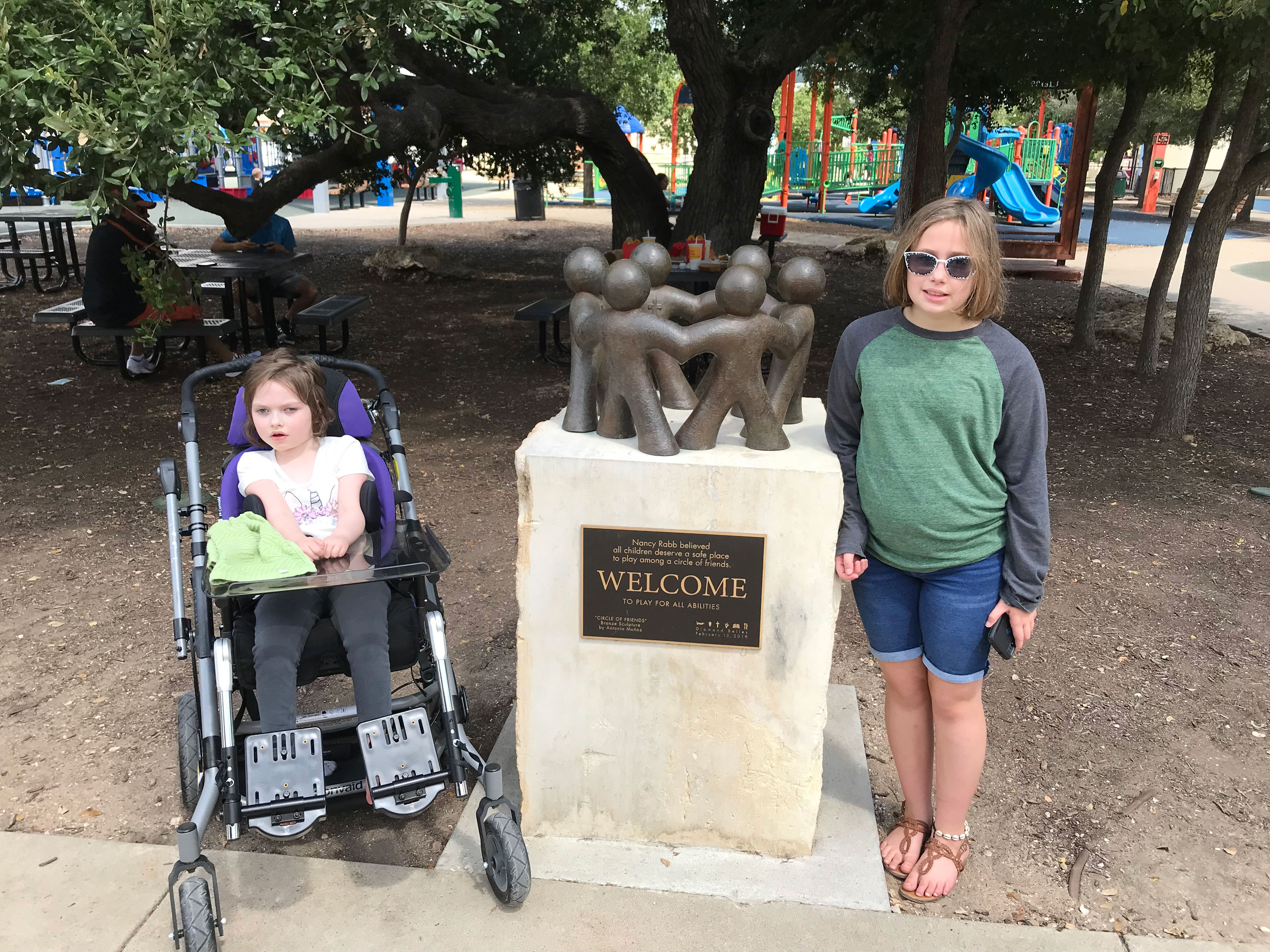
Sophia with her sister at a playground

Sister

Isabella is part of Sophia's support system in a way no program can replace. She brings sibling love, inclusion, patience, and ordinary family moments that Sophia deserves to be part of.

Supporting Sophia also means remembering her sister: making room for Isabella's childhood, activities, feelings, and relationship with Sophia while the family navigates medical complexity.

Sophia with Isabella in a field of bluebonnets in 2017

2017

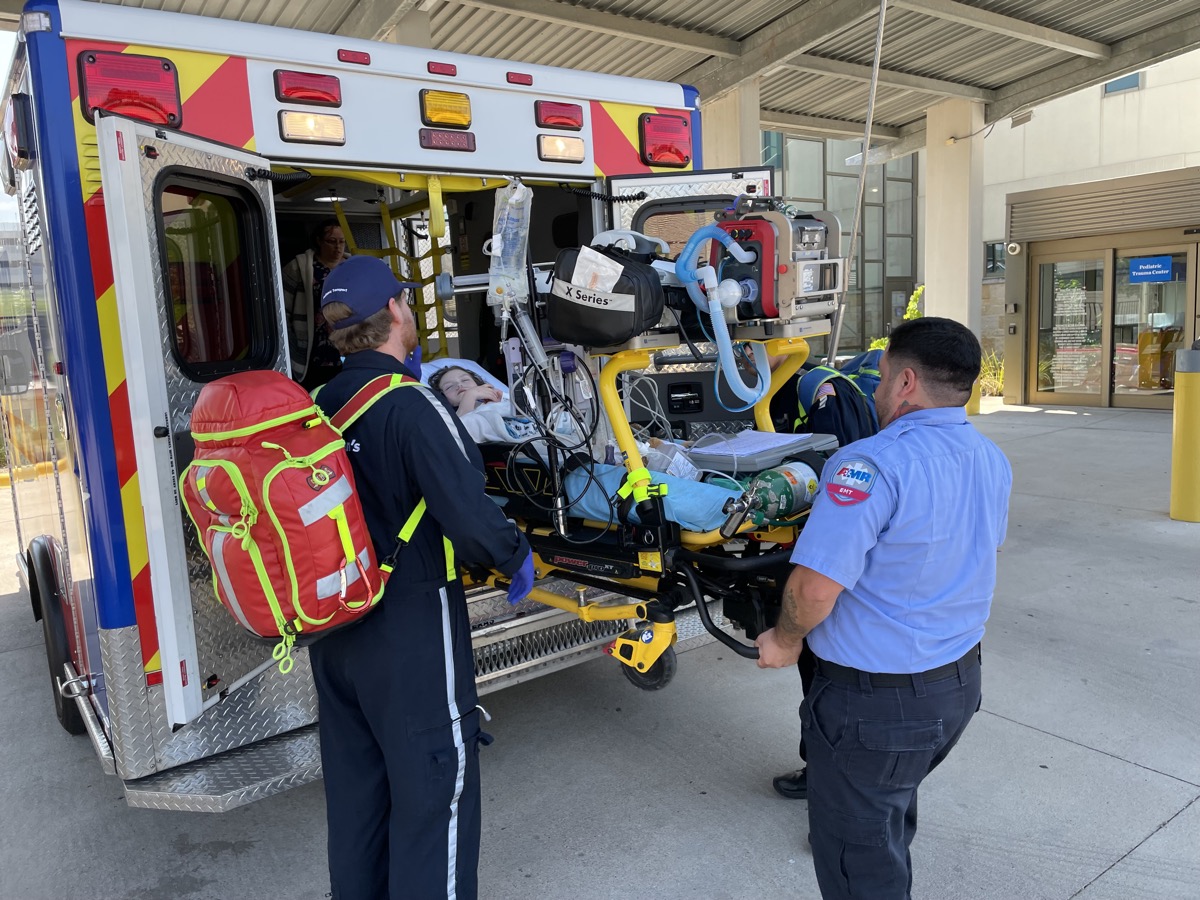
Sophia being transported by emergency medical services in 2023

2023

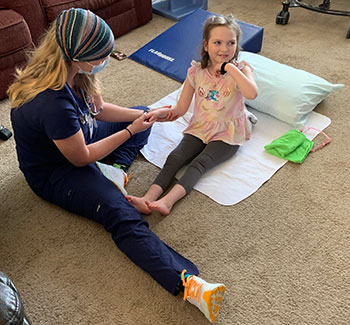
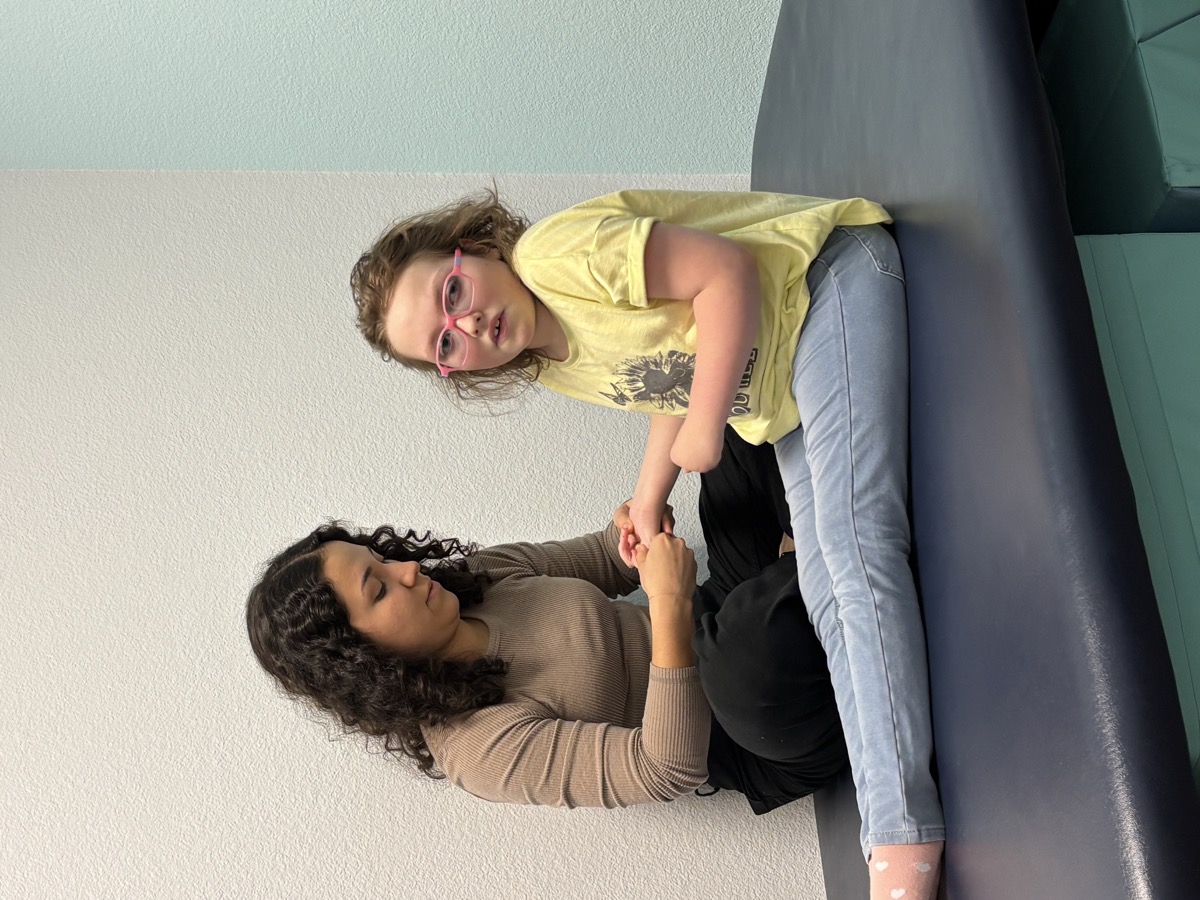
Sophia receiving therapy support in 2024

2024

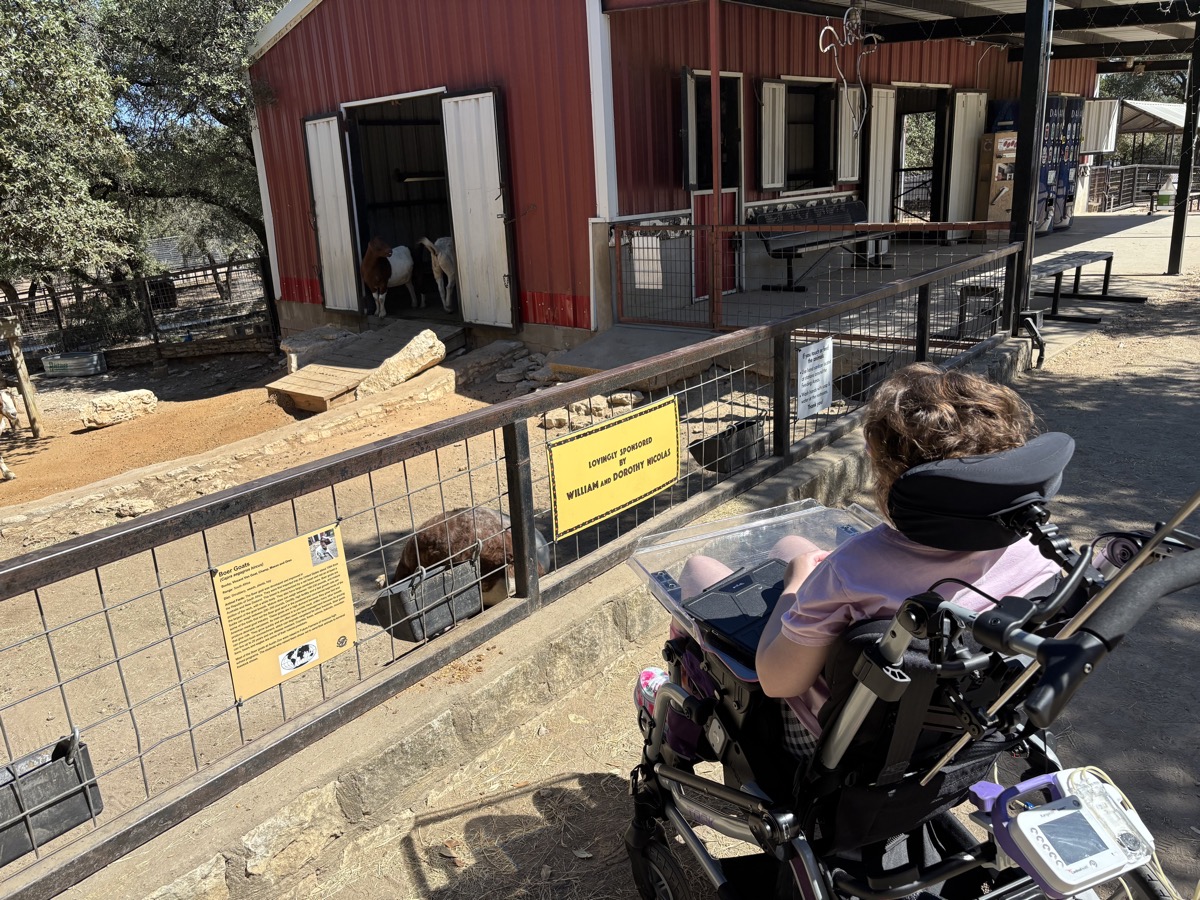
Sophia using her wheelchair during a community outing in 2025

2025